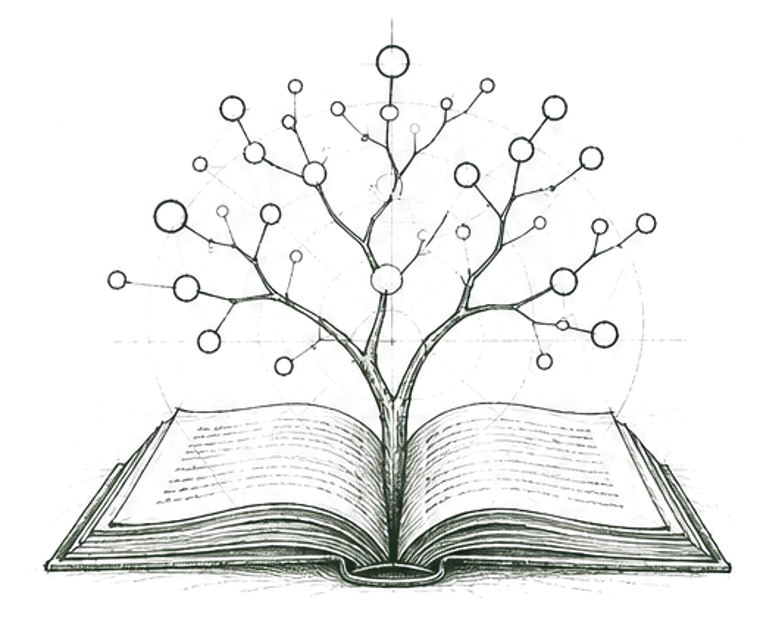
Knowledge base case study, part 1 of the atlas journey
The Offerings Atlas: mapping what 166 AI platforms cover, and what they don't
Built 6 to 10 October 2026, release 1 on 14 October.
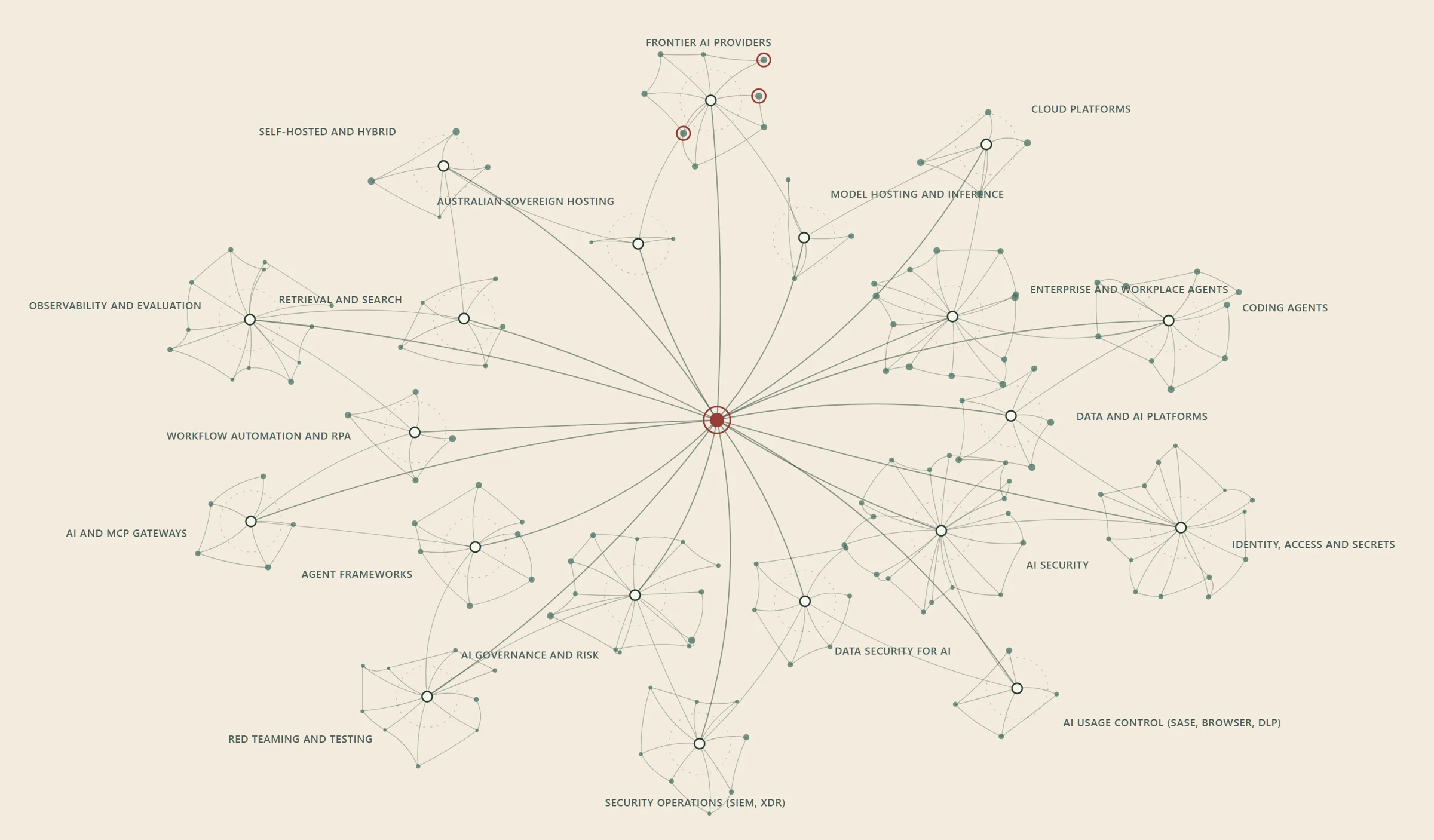
I built a knowledge base of AI agent security controls that agents research, verify and keep rechecking as vendors ship. It covers 166 platforms and tools, and its real product is the gaps: what each platform does not cover, labelled by how well that has been tested.
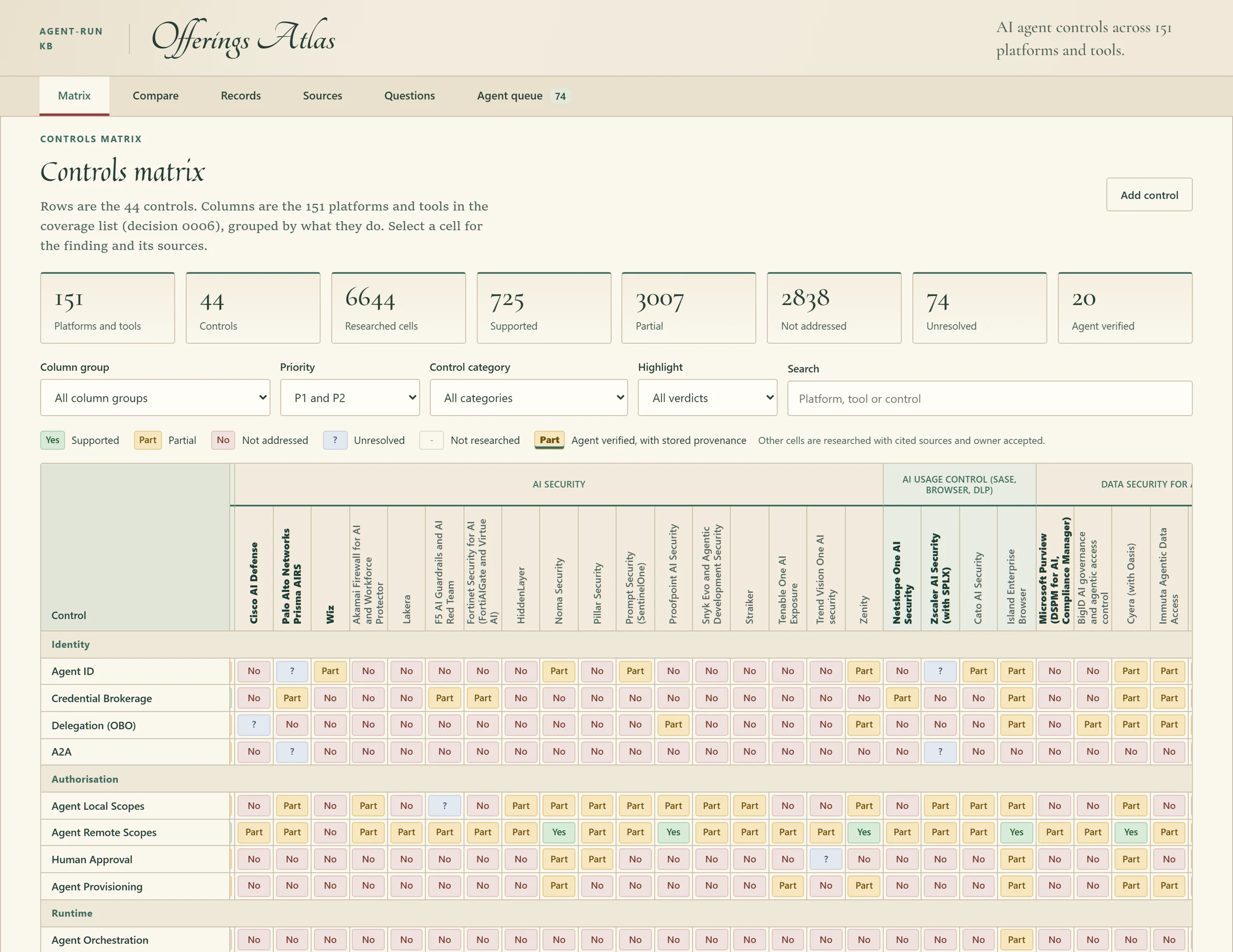
The atlas holds 7,304 researched findings across 44 controls and 166 platforms and tools, backed by 4,205 sources that are each tiered by who published them. 33 cells are agent verified, each with the stored page, its hash and a quote a pure function found on that page. It runs on my own machine through a local gateway with two model families, Claude and GPT, and no API keys. 250 automated tests pass.
What changed on 14 October
A client mostly wants to know what a platform does not do, because that is where the work sits. So I tested the gap calls. A blind re-check of a sample found a third of them were wrong, nearly always a recent release or a feature the first search missed.
- Gap labels. Every gap is now confirmed, likely, unchecked or disputed. Confirmed means two model families each searched to a fixed standard (the docs index, a docs search, 12 months of release notes and the API or repository) and found nothing.
- Rechecks when vendors ship. A change on a vendor's release notes sends its gaps back for checking, so a gap does not outlive the release that closed it.
- Coverage. An audit against the market added 14 platforms, including Red Hat OpenShift AI, Chrome Enterprise Premium and VMware Private AI Foundation.
- Honest limits. Most cells still wait in a queue the evaluator works through at a daily cap, and the page says which basis each answer rests on.
What it demonstrates
- Agent design. Four agent roles with separate runs and narrow permissions, none of which checks its own work.
- Knowledge engineering. One controls matrix projected into an OKF v0.2 tree, with frontmatter, chunks and an eligibility rule for agents.
- Provenance. Every verified claim rests on a stored page, a hash and a quote that can be checked again without trusting the agent.
- Evaluation. A labelled test set with deliberately altered claims, run against the real judge before it was allowed to write.
- Governance. Facts run with no human gate, while advice for an enterprise goes through a pull request with named approver roles.
- Cost engineering. Change detection by section hash, so only changed pages go back to a model.
What's next
- Work the queue. About 8,500 checks are queued across the priority platforms, at a daily cap, with the first pass due in early November.
- Grow Ask the Atlas. The public sample widens so the questionnaire covers more of the stack people actually run.
- Client grade. Signed releases, access-controlled delivery and confirmed gaps only for anything a client relies on.
Figures come from the project's own repository, evaluator runs and gateway proof log as of 14 October 2026. Verdicts describe documented capability, not tested deployments, and the client in the questionnaire is synthetic.
More projects
- Ask the Atlas: an interactive questionnaire over the knowledge base Interactive capstone, October 2026
- A local gateway for headless Claude and Codex Personal tooling, October 2026
- Building a governed AI agent on an open knowledge base Agent build case study, September 2026
- Securing Claude Cowork: controls, gaps and safer defaults Practitioner reference, Version 1.4
- Runner: Claude study game Study game, July to September 2026
- Human, script or AI? Spotting AI-driven attacks in the SOC SOC advisory white paper, Version 5
- AI and MCP access governance Portfolio proof of concept, May to July 2026
- RESYNTH research pipeline Open-source tool, First released June 2026
- AWS security architecture case study Fictional case study, April 2026
- Incident response planning portfolio Planning portfolio, April 2026